XERF Lifting Seoul: Understanding the Treatment
Facial lifting and skin tightening are related but distinct goals. Lifting focuses on the appearance of sagging contours, while tightening focuses on skin firmness and elasticity. At ODE Clinic, DEEP MODE XERF is a radiofrequency treatment used to address both concerns. It is one of several options considered during a consultation, alongside ultrasound and other radiofrequency devices. The appropriate approach depends on what is causing concern in a particular area, not simply on the name of the device.
How DEEP MODE XERF works
DEEP MODE XERF uses radiofrequency energy at 6.78 MHz and 2 MHz. ODE Clinic uses the device exclusively in DEEP MODE, with the aim of delivering energy to deeper tissue as well as addressing skin firmness. Areas discussed during consultation can include the jawline, folds beside the nose, and sagging around the mouth. The device also uses cooling during treatment. The doctor assesses the treatment area and discusses the approach before a procedure is planned.
Radiofrequency devices use controlled energy to heat tissue, but devices and treatment modes differ in how energy is delivered. ODE Clinic’s DEEP MODE protocol is intended to reach deeper layers associated with facial support, including the superficial musculoaponeurotic system, or SMAS. That intention should not be interpreted as a promise of a particular degree of lift. Facial anatomy, skin condition, and treatment design all matter when assessing what a procedure can reasonably address. During consultation, it is useful to describe whether the main concern is a softer jawline, loose skin, a fold, or a loss of facial fullness. Those concerns can look similar in a mirror, but they do not necessarily call for the same treatment. The doctor can then explain which areas to treat and what kind of change to expect.
DEEP MODE XERF combines two radiofrequency frequencies in a protocol intended to address sagging and firmness. The starting point is an individual assessment of the area of concern, rather than an assumption that one device suits every face.
Who may consider the treatment?
XERF may be discussed by people concerned about facial sagging, reduced skin firmness, or changes around the jawline and mouth. It may also be relevant when folds beside the nose are part of a broader concern about the mid-face. These descriptions are starting points for consultation, not a diagnosis. Changes in contour can involve skin, underlying support, and facial volume in different proportions. The doctor can examine those factors before recommending a treatment.
A patient concerned about a lower-face contour, for example, may benefit from discussing both skin laxity and the appearance of fullness around the mouth. Another patient may be more concerned about a hollow-looking cheek than loose skin. In that case, a volume treatment may be part of the conversation rather than assuming that radiofrequency alone addresses the concern. ODE Clinic also offers injectable treatments, including fillers and collagen stimulators, but these have different purposes from energy-based lifting. A consultation provides an opportunity to compare those purposes and decide whether a procedure is appropriate. Patients should describe previous aesthetic treatments, relevant medical history, and the areas they do or do not want treated. The doctor can use that information to explain the proposed plan and any points that need particular attention.
What makes treatment planning individual?
A treatment plan considers more than the number of energy applications, often called shots. The distribution of those shots, the areas selected, and the energy settings are also part of the discussion. ODE Clinic’s treating doctor conducts a one-on-one consultation and reviews the patient’s goals before treatment. This is particularly useful when a patient is deciding between a treatment for visible sagging and one directed primarily at skin texture or firmness.
Photographs can also help make the discussion more precise. ODE Clinic uses skin diagnostic photographs for before-and-after comparison and follow-up consultations. Rather than relying on a single impression, a patient and doctor can review the areas originally identified as priorities. Changes may take time, and the timing and degree of visible change depend on the individual and the treatment selected. A photograph is a way to support the review, not a guarantee that a particular change will occur.
It is also reasonable to ask why a specific device has been recommended, whether the proposed treatment is intended mainly for lifting or tightening, and how the planned areas relate to the concern. If the answer points toward another option, that is part of a useful comparison. The goal is a plan that reflects the patient’s anatomy and preferences rather than a uniform protocol.

XERF Lifting Seoul: Comparing Devices and Methods
ODE Clinic offers several energy-based treatments that approach facial concerns differently. XERF and Thermage use radiofrequency, while Ultherapy uses focused ultrasound. Density Alpha uses a sequence of radiofrequency delivery methods. These distinctions are useful because a patient seeking a change in facial contour may have different priorities from someone focused on skin texture and firmness. The following comparison describes each treatment’s intended role; it does not establish that one option will produce a particular result for every patient.
XERF and Ultherapy Prime
DEEP MODE XERF uses dual-frequency radiofrequency, while Ultherapy Prime uses high-intensity focused ultrasound. Ultherapy is designed to create focused thermal coagulation points in deeper tissue, including the SMAS. XERF uses a different form of energy and, at ODE Clinic, is delivered in DEEP MODE. Both can be discussed for concerns about facial sagging, but the doctor’s assessment of facial anatomy and the patient’s priorities guides the choice.
The distinction between radiofrequency and ultrasound is meaningful, but it does not by itself determine which treatment a patient should receive. During an assessment, the doctor can consider the location of sagging, skin condition, and facial fat volume. For someone concerned about a hollow appearance, it is particularly useful to explain which areas should retain their existing fullness. ODE Clinic describes Ultherapy as an option that can be designed with facial volume in mind. Patients can also ask about treatment sensations and comfort measures: ODE Clinic offers nitrous oxide sedation as an option for Ultherapy. The consultation should cover the intended treatment areas, the expected course of change, and the potential risks before a decision is made. A device comparison is most useful when it is connected to an individual concern rather than treated as a contest between technologies.
XERF and Ultherapy use different forms of energy, while Thermage and Density Alpha are primarily discussed as tightening options. The relevant question is which treatment approach matches the area and type of change a patient wants to address.
XERF, Thermage FLX, and Density Alpha
Thermage FLX uses monopolar radiofrequency to heat the dermis, with the aim of supporting collagen contraction and remodeling. It is generally discussed in terms of skin firmness, texture, and fine lines rather than a pronounced change in facial contour. Density Alpha uses sequential bipolar and monopolar radiofrequency to address superficial and deeper skin layers. XERF, in ODE Clinic’s DEEP MODE protocol, is positioned for both firmness and facial sagging concerns.
These descriptions can help patients frame a conversation, but the categories are not substitutes for an examination. A person may notice both reduced firmness and a change in the jawline, for example, and need help identifying which concern matters most. Thermage changes are generally gradual, with collagen remodeling developing over time. Density Alpha also involves radiofrequency heating and cooling during treatment. ODE Clinic offers nitrous oxide sedation as an option for Thermage, while comfort during any procedure should be discussed with the treating doctor. Ask how the proposed treatment is intended to address the specific area, what the session involves, and how progress will be reviewed. No radiofrequency device can promise the same outcome for every patient.
Side-by-side treatment comparison
The table below summarizes the main differences among the treatments discussed at ODE Clinic. The descriptions refer to their intended treatment roles, not guaranteed results. In practice, the doctor may consider skin firmness, facial contours, volume, previous treatments, and the patient’s comfort preferences together. A treatment aimed at skin texture should not automatically be expected to produce a substantial contour change, and a lifting consultation should also account for the condition of the skin.
| Treatment | Energy or method | Main consultation focus |
|---|---|---|
| DEEP MODE XERF | Dual-frequency radiofrequency | Facial sagging and skin firmness |
| Ultherapy Prime | High-intensity focused ultrasound | Sagging and facial contours |
| Thermage FLX | Monopolar radiofrequency | Skin firmness, texture, and fine lines |
| Density Alpha | Sequential bipolar and monopolar radiofrequency | Skin tightening and firmness |
Other options may enter the discussion when the main concern is not adequately described as loose skin. ODE Clinic offers fillers and collagen-stimulating injectables for volume-related concerns. These procedures use a different approach from energy-based lifting, so their suitability should be assessed separately. A combined plan should not be assumed to be necessary: the doctor can explain whether a single treatment or a sequence of treatments is appropriate for the patient’s goals.
XERF Lifting Seoul: Consultation, Cost, and Planning
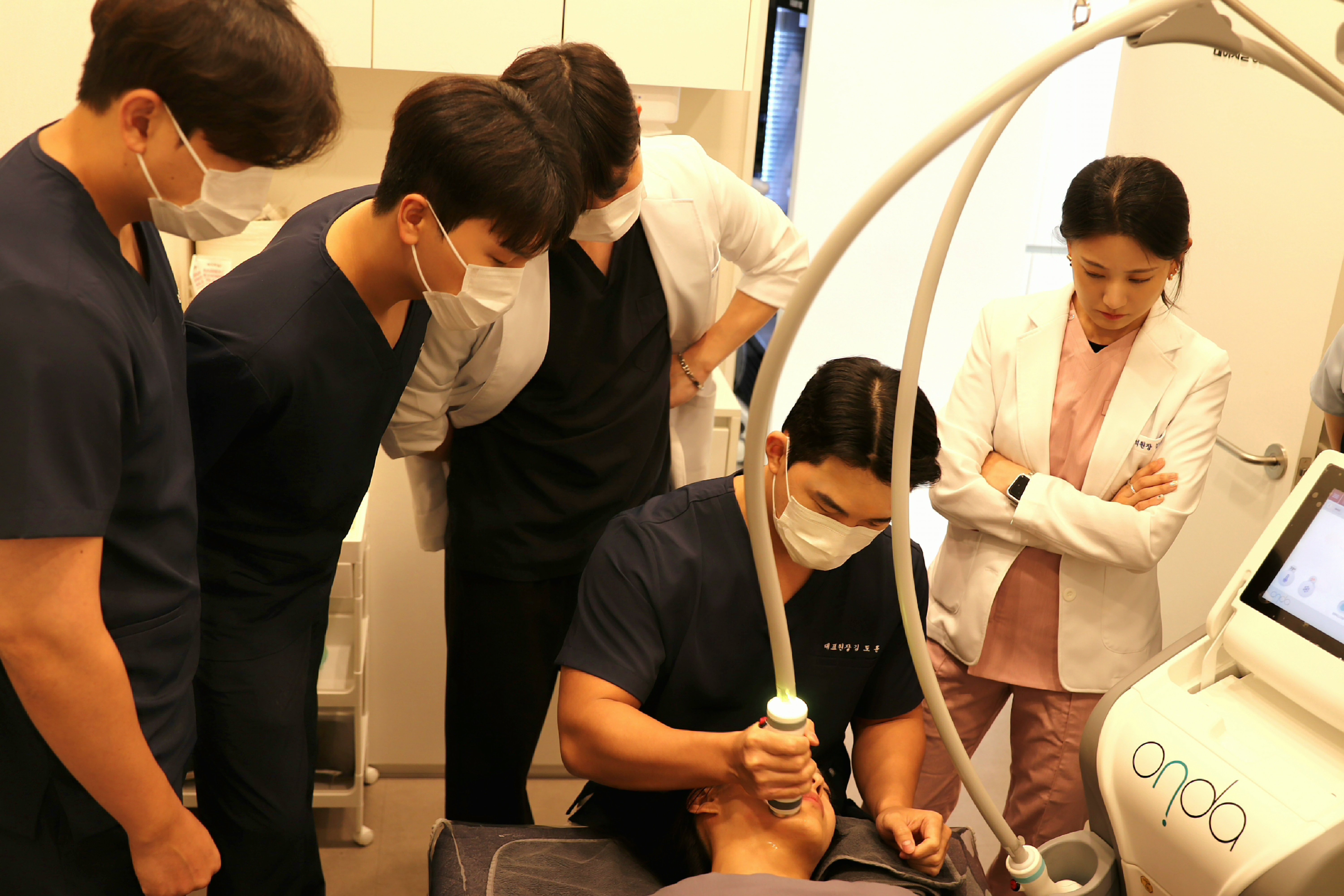
A useful consultation connects the treatment method to practical decisions: which areas to address, how the procedure is designed, what it costs, and how to assess change afterward. At ODE Clinic, the treating doctor provides a one-on-one consultation and discusses the patient’s needs, timing, cost, and potential treatment effects. Patients can use that conversation to compare XERF with other options without committing to a device before their concerns have been assessed.
What to discuss before treatment
Start by identifying the area that matters most, such as the jawline, cheeks, or skin around the mouth. Describe whether the concern is sagging, a change in texture, or a loss of fullness. It is also helpful to share relevant medical history and previous procedures. The doctor can explain whether DEEP MODE XERF is suitable, which areas are proposed for treatment, and whether another method would better match the concern.
Ask how the treatment will be planned rather than focusing only on a quoted shot count. The areas covered and the way energy is distributed are relevant to the plan. Patients should also ask what the procedure may feel like and what care is recommended afterward. Although cooling is used during XERF, comfort differs from person to person. As with other energy-based procedures, the doctor should discuss potential adverse effects and the steps taken to reduce risk. Tell the medical staff about any symptoms or concerns after treatment, particularly if they are persistent or unexpected. Finally, discuss how and when follow-up photographs might be useful. This helps establish a clear basis for reviewing the areas that were important before the procedure, while recognizing that visible changes and their timing are individual.
A good treatment plan explains the intended areas, the method, the cost, and how progress will be reviewed. It should also leave room for questions about comfort, potential risks, and alternatives.
Understanding XERF pricing
ODE Clinic lists DEEP MODE XERF prices by shot count. The listed price is ₩1,000,000 for 300 shots, ₩1,900,000 for 600 shots, and ₩2,750,000 for 900 shots. Eye XERF is listed at ₩1,100,000 for 300 shots. These prices exclude value-added tax. The number of shots and treatment areas should be discussed with the doctor; a higher count is not automatically the appropriate choice for every patient.
When comparing costs, look at what is actually included in the proposed treatment rather than comparing figures in isolation. A plan for the eye area is not necessarily interchangeable with a plan for another part of the face, and different devices use different treatment methods. Ask the clinic to explain the proposed area, shot count, applicable tax, and any other charges before proceeding. The same principle applies when considering an injectable treatment: a product priced by volume or vial should not be treated as directly equivalent to an energy-based procedure priced by shots. If the doctor recommends a different approach after examining the area, ask how that recommendation relates to the original concern. A clear explanation makes the price more meaningful because it shows what the treatment is intended to address.
Reviewing changes and follow-up
Changes after a lifting or tightening treatment can appear on different timelines. Thermage, for example, is associated with gradual collagen remodeling, while the course of change after any treatment depends on the individual. ODE Clinic uses diagnostic photographs and follow-up consultations to review treatment areas. Patients can ask the doctor when a comparison would be useful and which features should be assessed, such as skin texture, facial contours, or the area around the mouth.
It is helpful to return to the goals established at consultation rather than evaluating every facial feature at once. If the original concern was the jawline, for example, the doctor can review that area alongside the photographs taken before treatment. If the concern was skin firmness, the discussion may focus on texture and elasticity. Individual variation matters: the timing and extent of change cannot be predicted precisely from another person’s experience or from the device name alone.
ODE Clinic’s consultation process also allows patients to discuss further care if their priorities change. That does not mean additional treatment is automatically needed. The doctor can review the outcome, answer questions, and explain whether another assessment or procedure is appropriate. Patients who are comparing options should leave the consultation with a clear understanding of the proposed treatment and a realistic way to evaluate it.



Frequently Asked Questions
Q.What does ODE Clinic offer for facial lifting and tightening?
A.ODE Clinic offers DEEP MODE XERF, Ultherapy Prime, Thermage FLX, and Density Alpha. The treating doctor discusses the options in a one-on-one consultation.
Q.Who might consider DEEP MODE XERF?
A.It may be discussed by people concerned about facial sagging, skin firmness, or changes around the jawline and mouth. The doctor assesses the area before recommending treatment.
Q.How is XERF different from Ultherapy?
A.DEEP MODE XERF uses dual-frequency radiofrequency, while Ultherapy Prime uses focused ultrasound. The doctor can explain which approach aligns with the patient’s concerns and facial anatomy.
Q.How much does DEEP MODE XERF cost?
A.ODE Clinic lists DEEP MODE XERF at ₩1,000,000 for 300 shots, ₩1,900,000 for 600 shots, and ₩2,750,000 for 900 shots, excluding value-added tax. Eye XERF is listed at ₩1,100,000 for 300 shots, excluding value-added tax.
Q.Where is ODE Clinic, and how can I contact the clinic?
A.ODE Clinic is at 8F, Gyeongwon Building, 340 Gangnam-daero, Gangnam-gu, Seoul. Call +82 2-569-0222 to discuss an appointment.
Clinic Information
| Clinic | Ode Clinic |
|---|---|
| Specialty | Dermatology |
| Address | Seoul, Gangnam District, Gangnam-daero, 340 8F |
| Phone | +82 2-569-0222 |
| Website | https://odeclinicseoul.com/en |
 Ode Clinic